
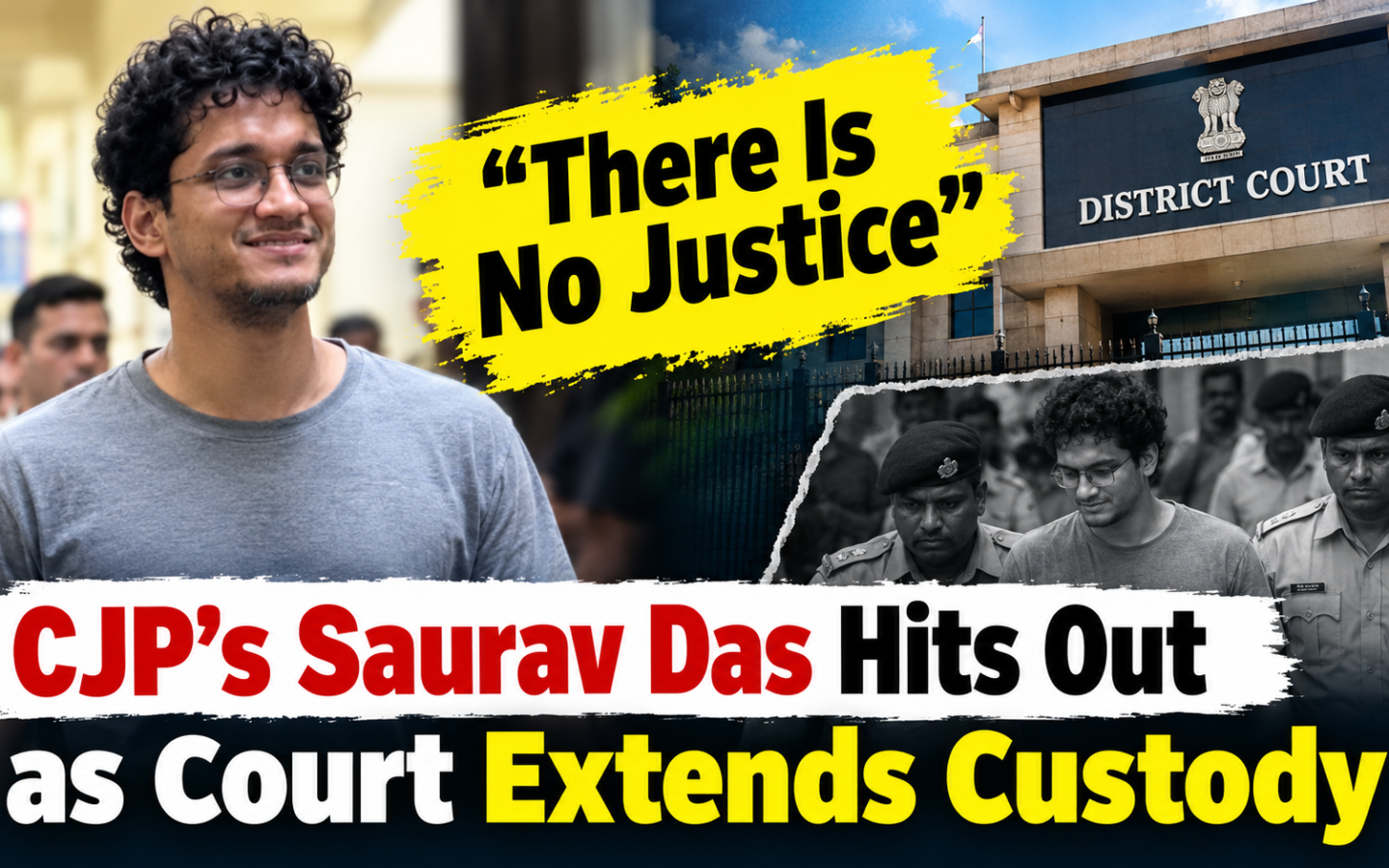
Saurav Das says there is “no justice” as he leaves court; police say the two broke a promise to keep the peace
New Delhi: A court on Monday extended the judicial custody of two spokespersons of the CJP, Saurav Das and Ashutosh Ranka, by two more days. They were arrested for entering Jantar Mantar, a place where protests are no longer officially allowed.
Judicial custody means a person is kept in jail on the court’s orders while the case continues.
Das Speaks Out
After the hearing, Saurav Das spoke from inside a police van as he left the court. He said he felt justice had not been done. He also questioned the reasons the court gave for turning down their sureties.
A surety is a promise, often backed by money, that a person will follow the rules if they are let out. Police had said the two had entered the Jantar Mantar site during a protest and broken security rules.
“We’re in an emergency. There is no justice. This is a police court and you see what is happening. Just look at the ground that they have taken,” Das shouted. He made these remarks in an interview with Smita Sharma Journalist, a YouTube channel.
What the Court Said
The decision was made by a special executive magistrate (SEM) at the Mandir Marg police station. An SEM is an official who can pass certain orders to keep law and order.
The order, which was seen by Hindustan Times, said the two CJP leaders had “deliberately breached” bonds they signed on October 11. A bond is a written promise to behave in a certain way. The court said their actions were “not above board” and showed “no respect for law.” It also said they had a habit of calling for protests at places where protests are no longer allowed.
The magistrate said there was an “imminent apprehension,” meaning a worry that trouble could happen soon. Because of this and the men’s past behaviour, the court said Das and Ranka should get a chance to put their side in writing. They have two days to submit their written replies, with an advance copy going to the Investigating Officer, the police officer in charge of the case.
The court also repeated what the police told it. The police said the arrested leaders used social media to call again and again for protests at places not approved for them, such as Jantar Mantar and Connaught Place.
The order said the police application was “supported by substantial material on record.” It said there were serious worries about a possible breach of peace and a disturbance of public calm, and that these could not be brushed aside without careful thought.
How the Case Began
Das, Ranka and their associate Ajinkya Shinde were detained on October 13. Police said they went into Jantar Mantar, which has been “de-notified.” This means the government has taken away its official status as a place for protests.
A video shared by the CJP that day showed the three jumping over the locked gates.
Shinde was released on a personal bond and a surety of ₹5,000. Das and Ranka were sent to five days of judicial custody. The court said the two had earlier signed a surety bond promising to keep the peace, and that entering Jantar Mantar broke that promise.
A Third Leader Is Arrested
A few days after Das and Ranka were arrested, another CJP leader, Abhijeet Dipke, was also arrested briefly. Police picked him up on October 16 while he was on his way to Connaught Place.
The CJP had called for a march named “Lehra Do Tiranga” at Central Park in Connaught Place that day.
A day later, a special executive magistrate released Dipke on a conditional bail bond, which means he must follow certain rules to stay free. The main rule is that he must not cause any breach of peace for one year.
What Happens Next
For now, Das and Ranka remain in custody. They have two days to give the court their written replies, and the court will decide what to do next after reading them. Das says the court’s reasons are unfair, while the court and police say the two broke their promise to keep the peace.
Quick Glossary
- De-notified site: A place that has lost its official permission to host protests.
- Surety: A promise, often with money behind it, that someone will follow the rules.
- Bond: A written promise to behave in a certain way.
- Judicial custody: Being held in jail on a court’s orders.
- Investigating Officer (IO): The police officer who investigates a case.