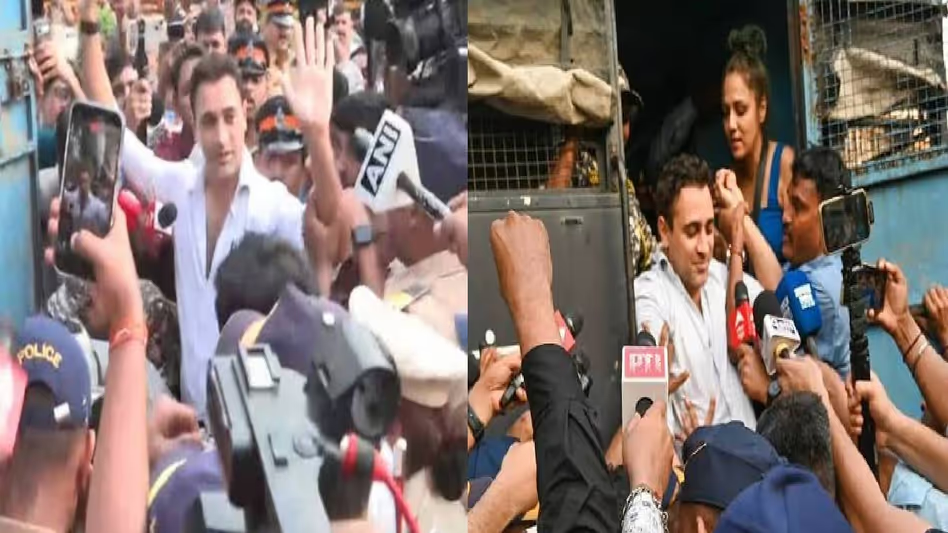
NEW DELHI: Actor Imran Khan has been told to leave India by October 28. The notice came after he joined a protest in Mumbai on October 10 against Chief Election Commissioner Gyanesh Kumar. The move has started a debate about the government’s powers over foreign nationals and the rights of Overseas Citizen of India (OCI) cardholders.
What happened
Khan holds US citizenship and an OCI card. He was detained during the protest. The action followed a complaint by BJP leader Kirit Somaiya, who claimed Khan broke the law by taking part in the demonstration.
Somaiya told reporters that many people like Khan want to live in India but harm its image. He demanded that action be taken against all of them, including deportation.
A police official said Khan is not an Indian national, and that foreigners are not allowed to take part in political protests or activities in India.
It is important to note that the notice and the allegations do not, by themselves, prove that Khan committed any offence.
What are the relevant laws that are being cited here?
The notice cites Sections 7 and 29 of the Immigration and Foreigners Act, 2025.
• Section 7 enables the central government to regulate entry into and departure from, and presence in, India of foreigners, along with their stay and movement within India.
• Section 29 concerns deportation of foreigners from India, which may be done due to violation of provisions of the Act or any directions issued under it or security related issues.
What is an OCI card?
An OCI card is given to people of Indian origin who hold another country’s citizenship. Despite the name, it does not make a person an Indian citizen. It gives benefits such as a lifelong visa with multiple entries into India.
OCI cardholders cannot vote in Indian elections or stand for election to Parliament or state assemblies. They must also follow Indian laws on foreigners and immigration. Their OCI status does not give them an unconditional right to stay in India.
Supreme Court advocate Amitraj Kaushal described the card as a long-term link with India, not citizenship. He said it gives parity with NRIs in travel, work and property, but political rights stay out of its reach under the Citizenship Act, 1955.
Can OCI holders join protests?
According to Kaushal, the law does not clearly ban OCI cardholders from joining peaceful gatherings. However, the right to assemble peacefully under Article 19 belongs to citizens, so OCI holders cannot claim it in the same way.
Still, Articles 14 and 21 apply to everyone, including foreigners. Article 14 guarantees equality before the law, and Article 21 protects life and personal liberty.
The bigger risk
Kaushal said the real danger for OCI holders lies in immigration rules. Under Section 7D of the Citizenship Act, an OCI card can be cancelled if the holder breaks Indian law or acts against public interest or national security. This can only happen after a hearing.
Separately, the Centre has wide powers under foreigners’ laws to ask a foreign national to leave the country.