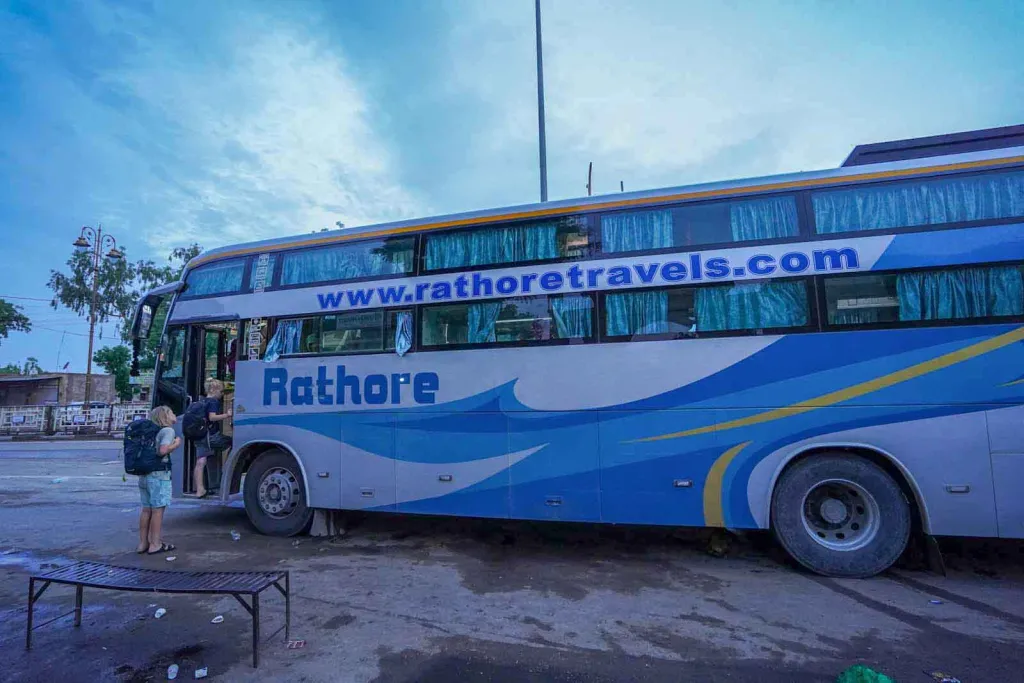
NEW DELHI — Following a tragic collision on the Yamuna Expressway in Greater Noida that claimed nine lives has created widespread ground checks across Delhi, Jaipur, and Lucknow. It have exposed alarming safety violations across India’s long-distance private sleeper buses.
Ground inspections conducted at key transit hubs—including Delhi’s Kashmiri Gate and Anand Vihar terminals, as well as stops in Jaipur—uncovered extensive non-compliance with passenger safety standards.
Also Read – Sensex Plunges Over 1,200 Points in Broad Market Rout; Historic NSE Debut Muted
Severe Dangers Founding in the Inspections
- Inaccessible Emergency Exits: Multiple interstate sleeper buses had emergency doors permanently locked or jammed shut. On several coaches, emergency exit windows were blocked by cargo sacks and luggage stacked in gangways.
- Missing Rescue Equipment: Window-breaking safety hammers were missing across nearly all inspected buses. Fire extinguishers were frequently absent, expired, or locked inside storage compartments behind driver cabins.
- Illegal Body Modifications: To maximize ticket revenue, operators routinely converted standard 2×1 berth layouts into cramped 2×2 configurations, narrowing aisles well below the legally mandated 450 mm width and obstructing rapid evacuation paths.
Systemic Evasion of Safety Codes
Under the Central Motor Vehicle Rules and Automotive Industry Standards (AIS-119 and AIS-052), sleeper coaches must maintain at least four functional emergency exits, certified Fire Detection and Suppression Systems (FDSS), and fire-retardant interior upholstery.
In practice, these mandates are routinely inspected. Operators commonly buy bare chassis registered as standard seating vehicles, then bring them to unauthorized local workshops to build unapproved sleeper cabins. This illegal modification compromises structural balance, weight distribution, and emergency exists.
Also Read – Matthew Breetzke Shines Again in Durban ODI Against Australia
High-Risk Travel for Commuters
With national rail networks running over capacity, millions of seasonal travelers and migrant workers have little choice but to pay premium fares for private sleeper services. Experts argue that recurring bus fires—such as recent tragedies in Kurnool and Jaisalmer—are predictable results of commercial greed and weak oversight. Addressing the crisis requires replacing compromised state inspection checks with independent, third-party type approvals, alongside evaluating bans on hazardous multi-bunk sleeper configurations in favor of safer, high-capacity semi-sleeper coaches.