
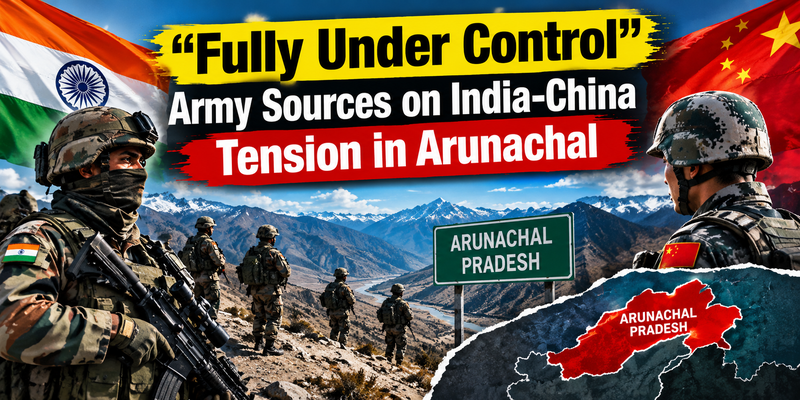
Patrols from India and China still run into each other in these two remote pockets, yet officials say there has been no violence and the talking channels are doing their job.
New Delhi: Two small border pockets in Arunachal Pradesh, Asaphila and Longju, remain sensitive spots on the India-China frontier. Defence sources told India Today that the reason is simple: the two countries don’t see the Line of Actual Control (LAC) the same way. Still, they insist things on the ground are stable and well under control.
Where the Trouble Comes From
The LAC is the informal line that separates Indian-held and Chinese-held territory. It was never clearly marked on the ground, and in several places the two sides draw it differently. Asaphila and Longju, both in Arunachal’s Taksing Circle, are among those places.
So when soldiers from both armies go out on routine patrols, they sometimes end up in the same stretch of land, each convinced it belongs to their side. Sources say these meetings have become a regular feature of life in the area.
No Fights, Officials Say
The sources were firm on one point. There have been no reports of violent clashes between Indian and Chinese troops here. Commanders on the ground are reportedly keeping their cool and staying in control.
Put plainly, patrols may bump into each other and stand off, but the situation hasn’t turned physical.
How Face-Offs Get Sorted Out
When a face-off happens, the two armies don’t wait for it to get worse. They use set military channels to deal with it. One is the flag meeting, where officers from both sides sit down face to face. Another is the hotline, which lets commanders get in touch quickly. The idea is to calm things down at the local level before they become a bigger issue.
The sources also mentioned a recent Corps Commander-level meeting in the Northeast. They called it a meaningful step towards making high-level talks in the region a regular habit rather than a one-off.
Officials said that keeping the conversation going matters most in places where the two countries disagree on the line. They also pointed out that friction in disputed areas makes diplomacy and negotiation even more necessary if the larger boundary questions are ever to be settled.
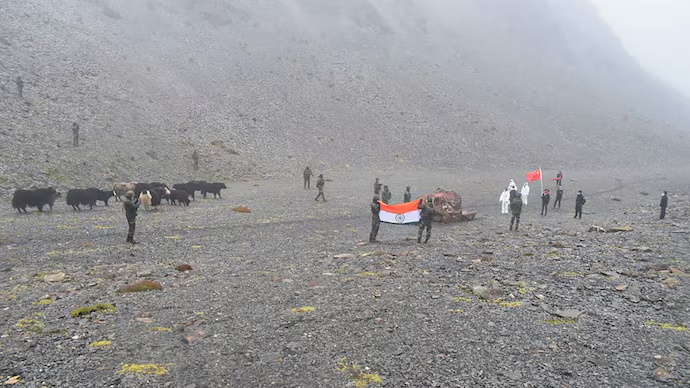
Roads, Bridges and Phone Networks
The army isn’t the only thing arriving in these far-flung areas. According to the sources, the government has been building all-weather roads, bridges, telecom networks and basic civic facilities. These are meant to help soldiers, but also the people who live nearby.
Better connectivity could change daily life in remote border villages. Officials said it may bring more economic activity and help residents depend less on outside support. In the long run, they added, it could even open the door to limited border trade and more contact between people on both sides, though only if the security and diplomatic situation permits.
A Sacred Route and Local Support
The area also carries deep religious meaning. The Tsari pilgrimage circuit, an old route, is sacred to Buddhists on both sides of the border.
The sources said that if calm continues, there might be room to think about allowing pilgrims to cross over in the future. They were careful to add that nothing like this can happen without suitable security conditions and an agreement between the two governments.
The armed forces have also been working with local communities. The sources listed health camps, emergency evacuations, school construction and jobs for local residents among their activities. The aim, they said, is to help people in these remote tribal areas reach essential services more easily and to build trust between soldiers and villagers.
“Fully Under Control”
“While Asaphila and Longju remain sensitive due to differing LAC perceptions, the overall situation is fully under control,” one source said. The same source added that military and diplomatic channels, along with development work in border areas, are key to keeping things steady.
Both pockets are still being closely watched as India and China try to handle their border differences through talks and regular communication.