No deaths reported so far; thousands moved to safety in India as a precaution
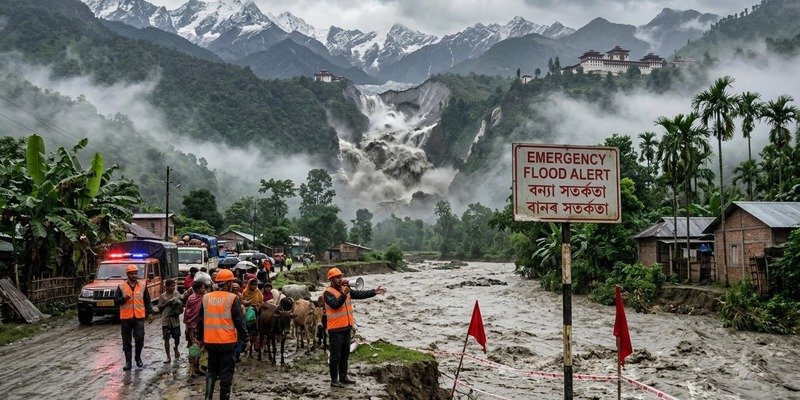
THIMPHU / ALIPURDUAR: A glacial lake in Bhutan burst on Thursday evening. The flood damaged a solar-powered irrigation project and sent flood warnings across parts of eastern India. No one has been reported dead so far.
What Happened
The flood began at Shintaphu Lake, also called Shintaphu Tsho. It sits high in the mountains of Bhutan’s Gasa district, below Wakila Mountain. When this lake overflows, the water runs south into the Mo Chhu river and rushes downstream.
Experts call this a glacial lake outburst flood, or GLOF. A glacier is a huge block of ice, and when it melts it can form a lake. If the natural wall holding that lake breaks, all the water is suddenly released. The surge can race through valleys carrying rocks, mud and broken trees, and it can destroy roads, bridges, farms and homes.
Damage in Bhutan
In Punakha district, the flood partly damaged a Solar Irrigation Lifting System in Guma Gewog. The system has stopped working, and officials have not yet checked the full damage. A local leader said it was installed earlier this year to solve the village’s water problems.
The flood also dumped debris on the Punakha-Gasa Highway, blocking a section of the road.
An official from Bhutan’s National Centre for Hydrology and Meteorology said there is a water-level monitoring station at Taktsimakhang, but it had not raised an alert when the first reports came in. Shintaphu is one of 17 glacial lakes in Bhutan considered potentially dangerous.
Alerts in India
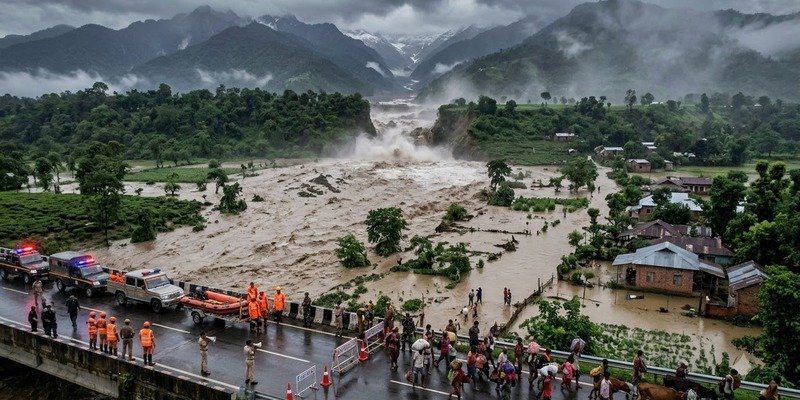
Bhutan’s Punatsangchhu river becomes the Sankosh river when it enters India. The Indian government issued a special warning that water levels could rise sharply in Alipurduar district in West Bengal and Dhubri district in Assam. Alerts were also issued for the Darjeeling hills, Jalpaiguri and Cooch Behar.
Disaster response teams (NDRF and SDRF) were sent to Tufanganj and Boxirhat in Cooch Behar, both near the Assam border. The floodwater was expected to reach the India-Bhutan border within six to eight hours.
West Bengal Forest Minister Manoj Kumar Oraon posted a video asking people near the Sankosh in Alipurduar to move to safer places. Darjeeling MP Raju Bista also urged people in the Hills, Terai and Dooars regions to stay alert.
People Safe, Red Alert Continues
Later, officials said all residents in the Indian areas were safe. Alipurduar Superintendent of Police Amit Kumar Shaw said there was “absolutely no need to panic” and that the situation was under control.
He said about 4,000 to 5,000 people were moved into shelters in school buildings, and more than 6,000 others were taken to safe areas. In Kumargram block, people stayed in 18 shelters, including schools, community halls and tea garden buildings. People from Assam also moved to safe places. Officials arranged dry food, drinking water and toilets.
The water flow has eased slightly, but a red alert is still in force for the Sankosh river system. Shaw warned that the river may carry dead fish, large pieces of wood and concrete debris, so people should stay away from it.
Authorities in both countries are watching the water closely.